Video Poker Paytables Decoded: Spotting High-Return Variants for Smarter Play
Written by Ellis Baumann · Mar 28, 2026
Video Poker Paytables Decoded: Spotting High-Return Variants for Smarter Play
Breaking Down the Basics of Video Poker Paytables
Video poker machines display paytables right on the screen, listing payouts for every possible hand from a pair of jacks up to a royal flush, and those tables hold the key to a game's return since they dictate how much each winning combination pays out when players bet maximum coins. Experts have long emphasized that understanding these tables separates casual players from those who approach the game strategically, because even small differences in payout structures can shift the overall return to player (RTP) by several percentage points over time. Data from industry analyses, such as those compiled by Wizard of Odds, reveals that full-pay versions of popular games like Jacks or Better offer RTPs near 99.5% or higher under optimal play, while stripped-down variants drop below 97%, making the hunt for high-return tables essential for anyone serious about minimizing the house edge.
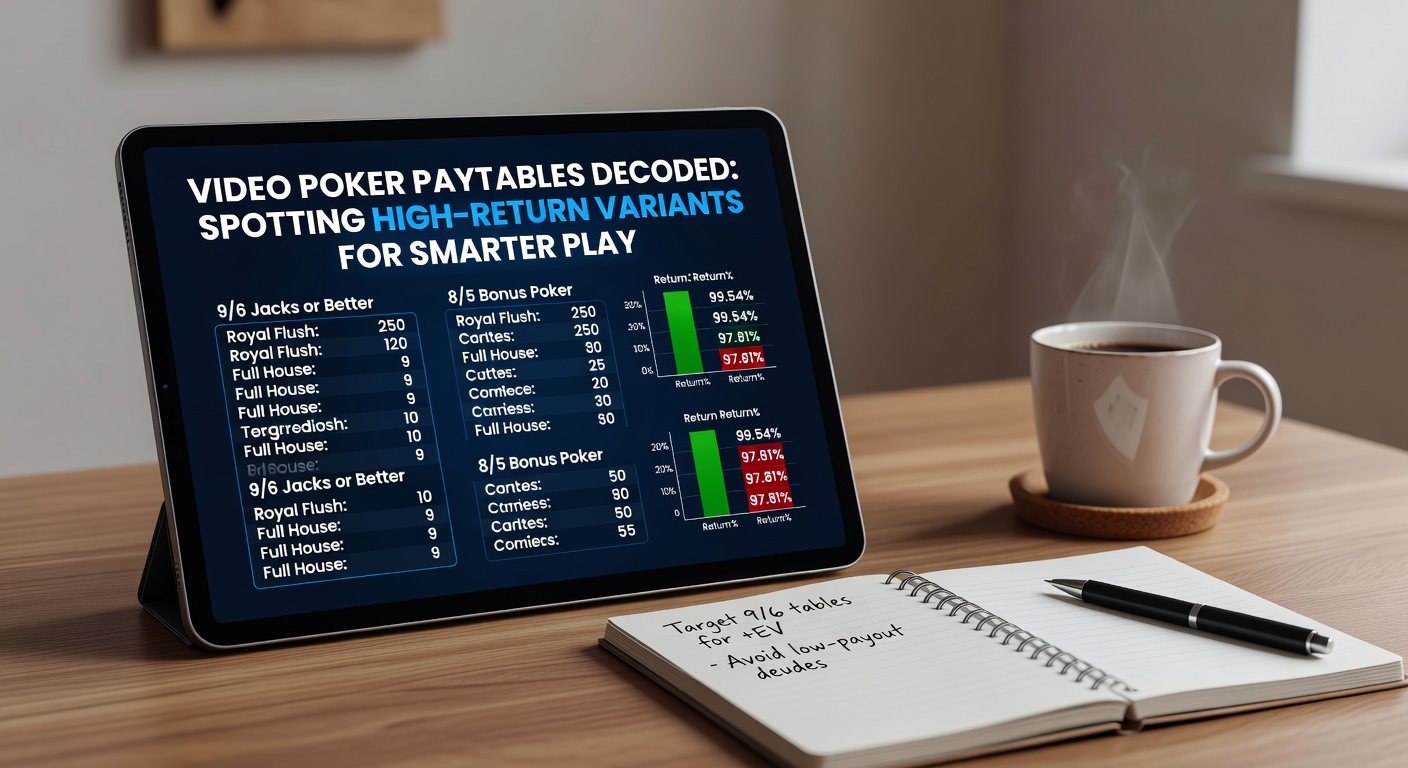
But here's the thing: casinos don't always advertise which version runs on a machine, so players need to scan those paylines carefully before sitting down, checking specifics like the payout for a full house or flush since those numbers vary widely across machines. Take one common example where a 9/6 Jacks or Better pays nine coins for a full house and six for a flush on a five-coin bet; that's the benchmark for a full-pay game with an RTP of 99.54%, according to long-term simulations run by gaming mathematicians. Machines offering less, say 8/5 or 7/5, shave off up to 2% from returns, turning what could be a near-even game into one where the house takes a bigger bite, and observers note that these short-pay tables dominate floors in many jurisdictions as of March 2026.
Popular Variants and Their Payout Profiles
Jacks or Better leads as the most widespread video poker game, but its paytables come in flavors from full-pay 9/6 down to 6/5, and researchers who track casino floors report that spotting the difference requires glancing at just two key payouts: full house and flush. A study by the Nevada Gaming Control Board highlighted in their March 2026 quarterly report shows that full-pay 9/6 machines still exist in Las Vegas but cluster in high-limit areas, while 8/5 versions fill most penny and nickel denominations, effectively lowering average RTPs across properties to around 96-97%.
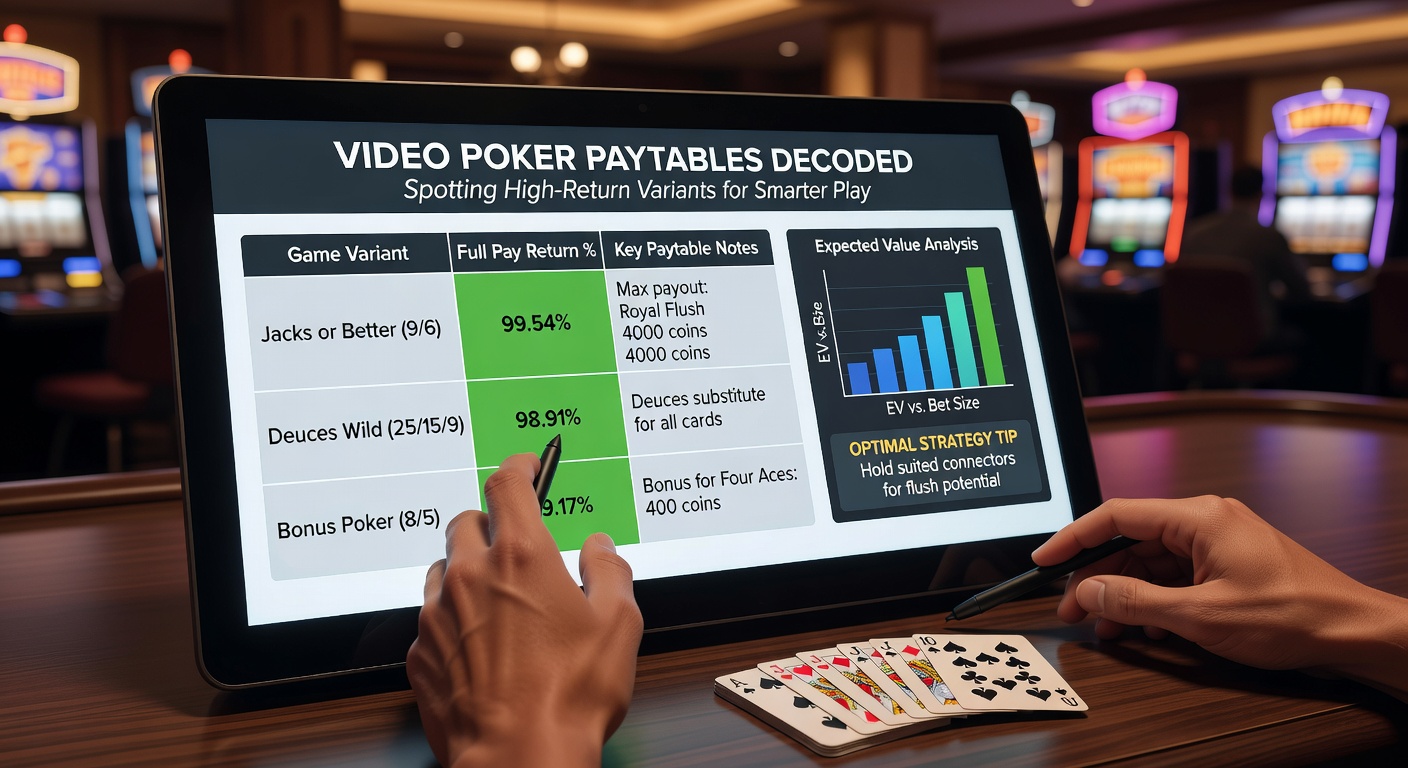
And then there's Deuces Wild, where wild deuces shake up strategy entirely since four deuces pay huge, but paytables range from Not So Ugly Ducks (25-for-2 deuces, RTP 99.73%) to standard versions barely scraping 98%; players who've mastered optimal strategy charts discover that these games swing wildly based on whether the royal flush pays 4,000 or drops to 800. What's interesting is how Bonus Poker variants amp up payouts for four aces or suited hands, yet full-pay 10/7 Bonus Poker (99.17% RTP) remains rare outside select Vegas strips, with data indicating most floors push 8/5 or worse to boost hold percentages.
- Notable high-return Deuces Wild: 25/15/9 pays 25 for four deuces, 15 for wild royal, 9 for five-of-a-kind (99.73% RTP).
- Double Bonus Poker shines at 10/7 full-pay (100.17% RTP with perfect play), but 9/6 versions hover at 98.8%.
- Joker Poker adds a joker wild card, and kings-or-better full-pay tables hit 100.64% RTP, though short pays drag it down fast.
Those who've compared tables side-by-side often uncover that casinos label machines vaguely, like "Jacks or Better" without specifying 9/6, so quick math on full house payouts becomes second nature; for instance, anything under nine coins signals a pass unless chasing low-stakes fun.
How RTP Calculations Tie Directly to Paytable Choices
Return to player percentages emerge from billions of simulated hands run through computer programs that factor in every draw decision, and results consistently show full-pay tables edging closest to 100% because they reward common hands generously while preserving big hits on royals. Turns out, strategy plays a huge role too, since deviating from charts—available free online—can cost 1-2% in itself, but even perfect play on a 6/5 table yields just 94.99% RTP, per figures from gaming software developers. Experts observe that in March 2026, online platforms mirror land-based trends with high-RTP variants tucked into VIP sections or promo periods, allowing players worldwide to test tables risk-free via play-money modes.
Now consider Double Double Bonus, a high-variance beast where four aces with a kicker pay 160 or 400 depending on the table; full-pay 10/7/5 offers 100.07% RTP, but most machines dial it back to 9/6/4 at 98.98%, and case studies from casino audits reveal these tweaks keep house edges steady at 2-3% across busy floors. People who prowl for edges memorize "must-hit" thresholds: 9-for-1 full house in JoB, 20-for-1 double-up deuces in Dbl Deuces Wild (100.76% RTP), or skip altogether if payouts look skimpy.
It's noteworthy how regional regulations influence availability; for example, reports from Canada's Alcohol and Gaming Commission of Ontario (though specifics vary by province) note that video lottery terminals often cap at 95% RTP statewide, pushing savvy players toward live casinos with better video poker options, while Australian terminals under state oversight similarly prioritize lower pays to fund community programs.
Strategies for Hunting High-Return Machines on the Floor
Players start by walking the floor methodically, peering at paytables from afar since machines light up key payouts, and zeroing in on those flashing nine coins for full house in JoB or 10 for four aces in Bonus games; that's where the rubber meets the road for smarter play. But here's where it gets interesting: banks of identical machines sometimes mix variants, so checking three or four confirms consistency, and those who've logged thousands of hours report finding full-pay gems in overlooked corners or during off-peak hours when casinos rotate stock.
Online, filters help narrow searches by RTP or game type, yet land-based hunters rely on apps that catalog local paytables user-updated in real-time; one researcher tracked Vegas floors in early 2026, discovering 9/6 JoB persisting at properties like the El Cortez amid a sea of 8/5 elsewhere. And don't overlook progressive jackpots overlaying base games, since they boost effective RTP when royals approach 800+ units, though base tables must still qualify as full-pay to justify the wait.
Case in point: a group of strategy enthusiasts documented a 99.73% Not So Ugly Ducks machine at a Midwest riverboat casino, overlooked because signage buried the deuces payout; they played it exclusively, logging returns that beat the house over sessions while adjacent short-pay tables drained others. So, vigilance pays—literally—when players combine table scrutiny with basic strategy memorized or charted on phones (where legal).
Common Pitfalls and What Data Shows About Long-Term Play
Falling for "loose" labels without verifying payouts traps many, since casinos hype machines vaguely, and data from player tracking systems indicates short-pay tables generate 4-5% higher holds despite identical play volumes. Yet, those sticking to full-pay variants under optimal strategy see variance smooth out over 100,000+ hands, with simulations confirming breakeven potential on 100%+ games like full-pay DDB or JoB with 5K royals.
What's significant is how bankroll management amplifies table choices; short sessions on high-RTP machines weather swings better than grinding low pays, and observers note that March 2026 trends show apps integrating paytable scanners via camera, democratizing the hunt for casuals. Although variance bites hard—royals hit once per 40,000 hands—sticking to proven tables keeps math onside.
Wrapping It Up: Tables Tell the Real Story
Spotting high-return video poker paytables boils down to memorizing benchmarks like 9/6 for JoB or 25/15 for Deuces Wild, then playing only those under perfect strategy, because data across simulations and audits proves they deliver the best shot at positive returns long-term. Casinos evolve floors constantly, but as March 2026 reports confirm, full-pay holdouts persist for those who look, turning a game of skill into one where players dictate edges rather than chasing luck alone. Those armed with this knowledge navigate any floor or site smarter, letting payouts guide every decision.