RTP Uncovered: The Real Return-to-Player Breakdown Across Slots, Video Poker, Blackjack, Roulette, and Baccarat
Written by Quinn Hughes · Mar 24, 2026
RTP Uncovered: The Real Return-to-Player Breakdown Across Slots, Video Poker, Blackjack, Roulette, and Baccarat
What RTP Actually Means in Casino Games
Return-to-Player, or RTP, represents the theoretical percentage of wagered money a game returns to players over time; casinos and regulators calculate it through millions of simulated spins or hands, ensuring long-term fairness while the house edge persists. Data from regulatory bodies shows RTP varies widely by game type, rules, and strategy, with slots often dipping lower than table games where skill influences outcomes. Turns out, players who grasp these figures make more informed choices, although short-term results swing wildly due to variance and luck.
Experts at gaming labs like Gaming Laboratories International run extensive tests, verifying RTP holds steady under certified conditions; for instance, a 96% RTP slot returns $96 for every $100 wagered on average, but over thousands of plays, not single sessions. And here's the thing: as of March 2026, updated audits from jurisdictions worldwide confirm these rates remain consistent, even with new game releases incorporating advanced RNG tech.
Slots: Where RTP Meets High Volatility
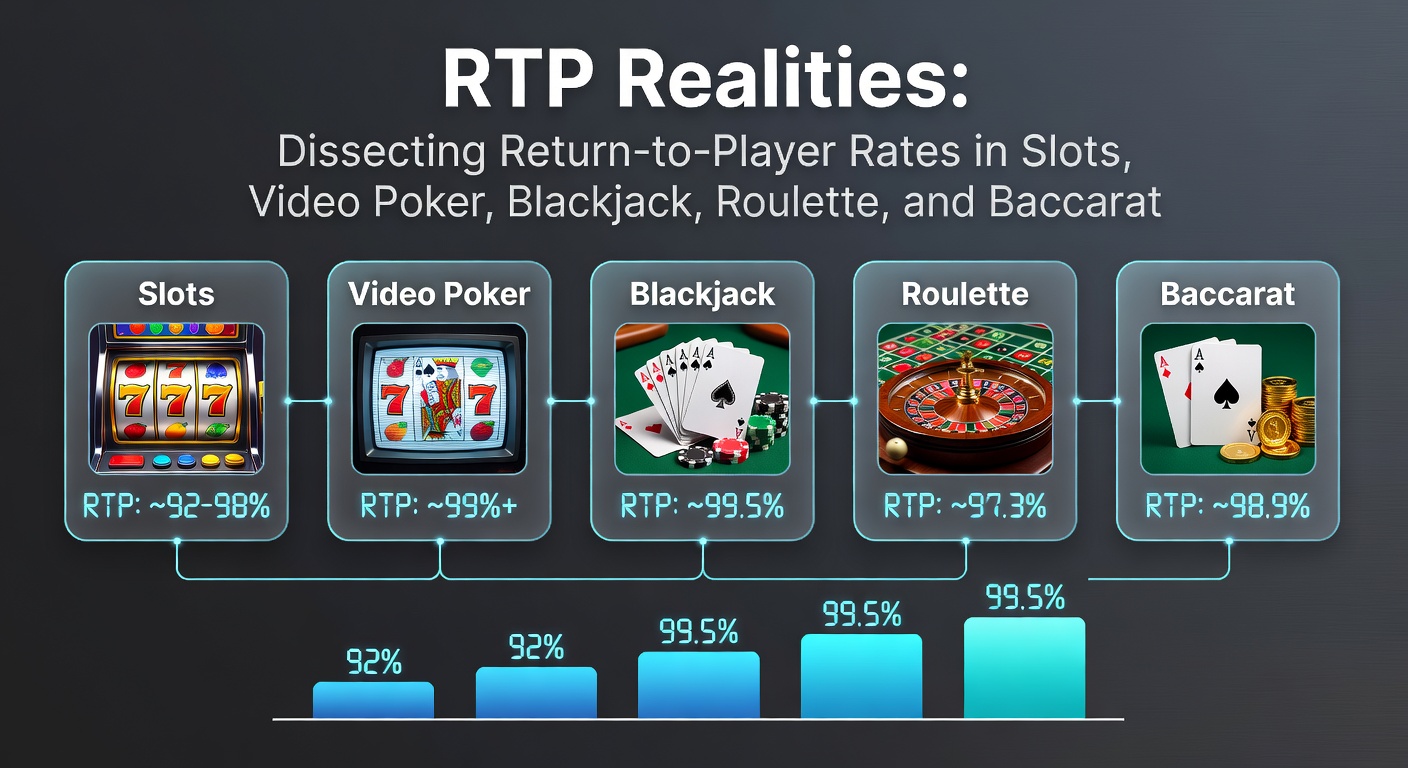
Slot machines dominate casino floors and online lobbies, boasting RTPs typically between 85% and 98%, yet averages hover around 92-96% across most titles, according to figures from the Nevada Gaming Control Board, which oversees rigorous monthly reporting. Low RTP slots, often found in land-based venues, edge toward 85-90% because of progressive jackpots that siphon funds into massive prizes, whereas high-RTP online versions push 97-98% with simpler mechanics and no physical overhead.
Take progressive slots like those tied to networks; they sacrifice RTP for life-changing payouts, dropping to 88-92% until jackpots hit, then resetting higher temporarily. What's interesting is how providers publish exact RTPs in game info—NetEnt's Starburst clocks in at 96.09%, while some Megaways titles from Big Time Gaming reach 96.5% or more, but players chasing max wins face brutal volatility that eats banks fast despite solid theoretical returns. Observers note branded slots, like movie-themed ones, sometimes lag at 94%, prioritizing flash over payback.
Yet low-volatility slots, such as Blood Suckers from NetEnt at 98%, deliver steadier play, appealing to those grinding sessions; research from industry analysts reveals these outliers shine in RTP rankings, though casinos balance them with lower-denomination machines featuring tighter holds.
Video Poker: Skill Boosts RTP to the Top
Video poker stands out because optimal strategy catapults RTP above 99% in variants like Jacks or Better (99.54% with perfect play) or Deuces Wild (100.76%, yes, player-edge territory under ideal conditions), far surpassing slots since decisions on holds directly impact payouts. Studies from university gaming programs, including those at the University of Nevada, demonstrate how basic strategy charts—freely available online—transform novice returns from 95% to near-perfect levels, making it one of the best casino bets when played right.
But here's where it gets interesting: full-pay machines, rare in modern casinos, offer those elite RTPs, while 9/6 Jacks or Better (99.54%) remains a benchmark; short-pay versions, common now, dip to 97-98%, eroding edges quickly without flawless execution. Players who've mastered full-pay 10s or Better report consistent long-term gains, although variance spikes during dry spells, demanding deeper pockets than slots.
Blackjack: Strategy Turns the Tide on House Edge
Blackjack delivers some of the highest RTPs, reaching 99.5-99.75% with basic strategy against standard rules (dealer stands on soft 17, double after split allowed), but side bets like insurance slash it to 92-95%, tempting yet foolish additions. Data from the Alcohol and Gaming Commission of Ontario confirms these figures hold in regulated online and live dealer formats as of March 2026, where infinite decks and rule tweaks barely nudge averages.
Switch to single-deck games with favorable rules, and RTP climbs to 99.8%; European no-hole-card versions dip slightly to 99.6% due to dealer advantages on busts, while continuous shufflers standardize play at 99.4%. Those who've studied card counting know it pushes RTP over 100% in live settings, though detection risks banishment, not theoretical impossibility. Infinite blackjack online maintains 99.5% RTP, blending live dealers with digital speed for endless hands.
Roulette: Wheel Rules Dictate Drastic Differences
Roulette RTP hinges on wheel type—European/single-zero yields 97.3% overall (2.7% house edge), while American/double-zero plummets to 94.74% because of the extra 00 pocket doubling the disadvantage; French roulette sweetens it further with La Partage/en prison rules on even-money bets, boosting those to 98.65%. Regulators in Australia, via the NSW Office of Liquor, Gaming & Racing, mandate clear disclosures, preventing hidden edges in digital wheels.
And straight-up bets? They sit at 97.3% in European but pay 35:1 regardless, underscoring pure chance; live online roulette mirrors physical RTPs precisely, with HD cams ensuring no funny business, though lightning variants add multipliers at reduced base returns around 96%. Players often overlook that, favoring red/black simplicity over complex calls.
Baccarat: Banker Bets Build Best Returns
Baccarat keeps it simple with RTPs of 98.94% on Banker (1.06% edge, minus 5% commission), 98.76% on Player (1.24% edge), and a riskier 95.36% on Tie (14.36% edge despite 8:1 or 9:1 payouts); side bets like Dragon Bonus tank further to 90-92%, per independent lab certifications. Live baccarat streams from studios worldwide lock in these rates, with squeeze formats adding theater without altering math.
So why do high rollers flock to Punto Banco? Commission tweaks in some Asian markets nudge Banker RTP to 98.98%, while no-commission variants adjust Tie payouts to preserve edges; experts observe Punto 2000 rules hitting 99.1% on Banker occasionally, though standard play prevails. Variance stays low, letting bets stretch longer than slots.
Factors Shifting RTP and Common Myths Busted
RTP doesn't budge for hot/cold streaks—RNGs ensure randomness, as verified by third-party audits; progressive jackpots, side bets, and rule variations tweak it most, with online platforms often edging higher sans venue costs. Myths persist that max bets unlock better RTP (false, except rare progressives) or casinos adjust live (illegal in regulated spots).
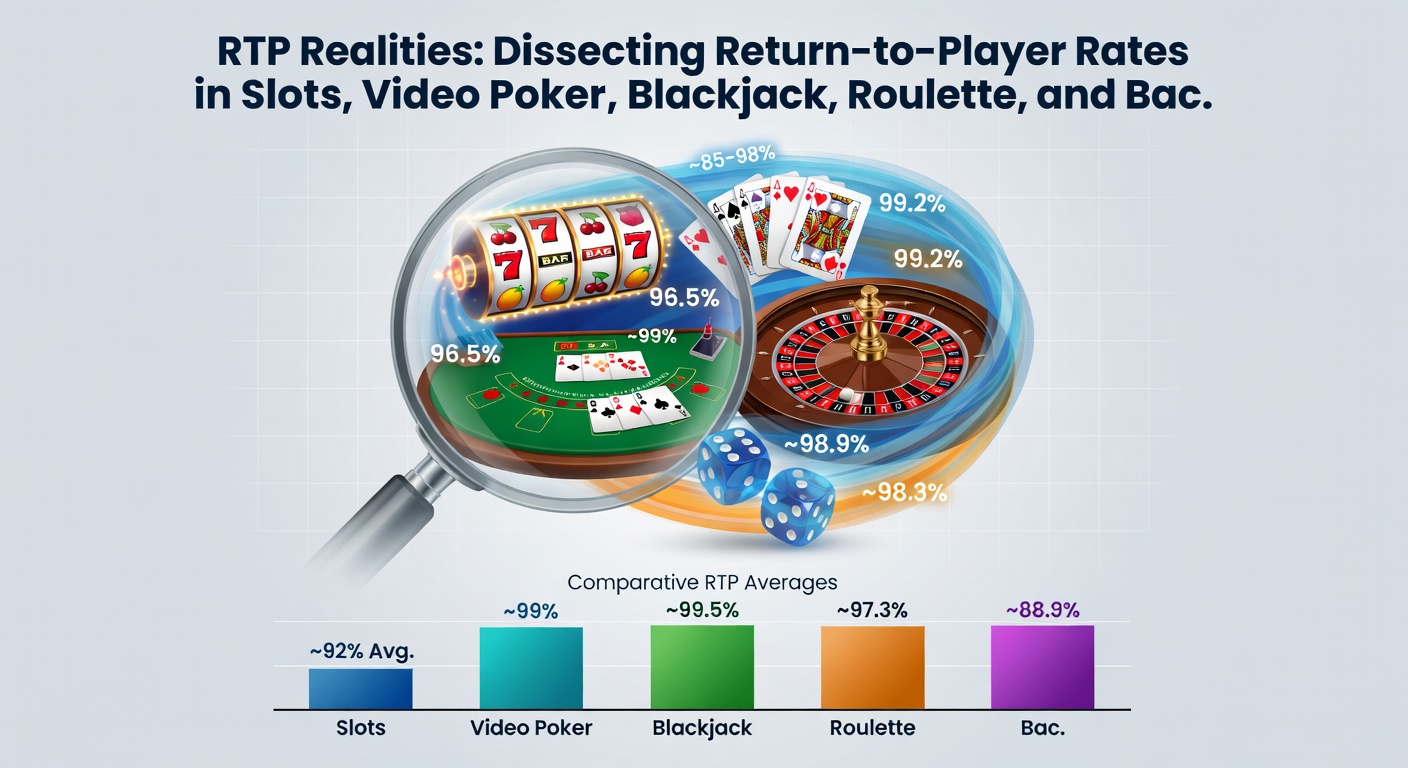
Comparisons reveal table games crushing slots on average RTP—99% vs. 94%—yet slots lure with jackpots; video poker bridges them via skill. People who've tracked sessions notice variance dominates short runs, where a 98% RTP game loses big anyway.
It's noteworthy how March 2026 updates from global watchdogs emphasize mobile RTP parity, ensuring apps match desktop fidelity amid rising play volumes.
Conclusion
Understanding RTP realities equips players across slots (92-98%), video poker (95-100+% with skill), blackjack (99+% strategy-driven), roulette (94-98% wheel-dependent), and baccarat (98-99% bet-wise) to spot value amid house advantages. Research consistently shows informed choices extend playtime, although no game guarantees wins; regulators enforce transparency, letting facts guide the floor. Those diving deeper find strategy trumps slots' allure for steady returns, while volatility adds thrill everywhere.