Random Number Generators: Safeguarding Fairness in Digital Roulette Environments
Written by Quinn Hughes · Jun 28, 2026

Random Number Generators: Safeguarding Fairness in Digital Roulette Environments
Digital roulette platforms rely on random number generators to produce outcomes that mirror the unpredictability of physical wheels, and these systems form the backbone of operational integrity across online gaming environments. Developers implement sophisticated algorithms that generate sequences of numbers corresponding to roulette positions from 0 through 36, while additional mechanisms account for the green zero in European variants and the double zero in American versions. Research from academic institutions has documented how these generators undergo continuous evaluation to maintain statistical randomness, with data indicating consistent performance metrics when subjected to standardized testing protocols.
Technical Foundations of RNG Implementation
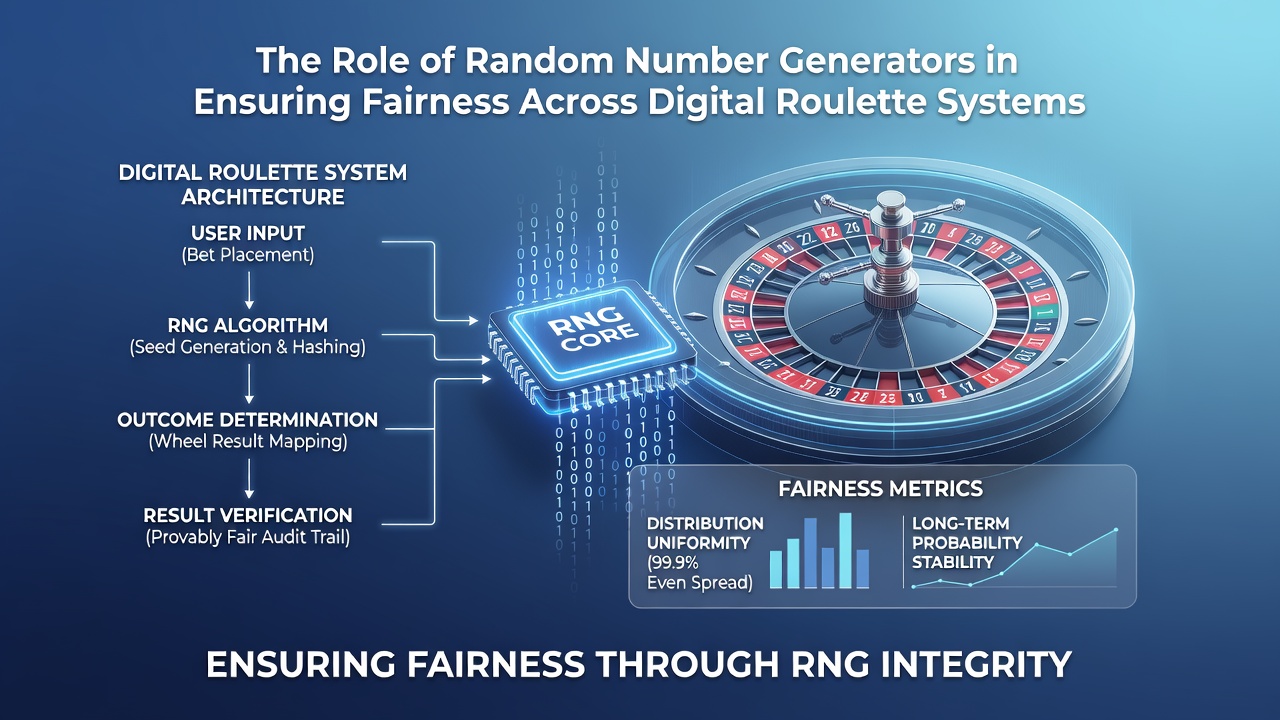
Engineers select pseudorandom number generator algorithms such as Mersenne Twister or more advanced cryptographic variants for roulette applications, and these tools produce extensive number streams that operators map directly to wheel outcomes. Seeding processes incorporate multiple entropy sources including system timestamps, hardware noise, and network activity patterns, which combine to initialize each sequence and prevent predictable patterns from emerging. Observers note that roulette-specific adaptations require the generator to handle not only number selection but also simulation of ball trajectory timing and deceleration rates, creating layered outputs that replicate live table dynamics.
Independent laboratories apply suites of statistical tests including chi-square analysis, serial correlation checks, and frequency distribution evaluations to verify that generated sequences align with expected probabilities. Figures from certification reports reveal that approved systems demonstrate deviation rates below established thresholds across millions of simulated spins, and these benchmarks help regulators confirm operational compliance before platforms receive authorization for public access.
Certification Processes and Regulatory Oversight
Multiple jurisdictions maintain distinct approval pathways for RNG components used in roulette software, and entities such as the Nevada Gaming Control Board conduct periodic audits that examine both source code integrity and live operational logs. In parallel, Canadian provincial authorities apply comparable review standards that focus on entropy quality and resistance to external manipulation attempts. June 2026 saw several regulatory bodies introduce updated testing frameworks that emphasize quantum-resistant algorithm evaluations, reflecting ongoing adaptation to emerging computational capabilities.
Those who study industry compliance patterns have observed that certified roulette systems undergo revalidation cycles every six to twelve months, during which fresh test batches of at least 100 million spins undergo scrutiny. This schedule ensures that any drift in generator performance receives prompt identification and correction before it affects player sessions.
Application Specifics in Roulette Simulations
Roulette implementations demand that RNG outputs translate into both the winning number and supplementary visual elements such as wheel rotation speed and ball bounce behavior, and developers integrate separate but synchronized generator streams to manage these components. One study revealed that decoupling number selection from animation timing prevents any correlation that could theoretically allow prediction, while maintaining the visual engagement expected by participants. Data collected from operational platforms shows that properly configured systems produce house edge percentages that remain stable within 0.01 percent of theoretical values over extended periods.
Technicians configure return-to-player calculations through precise weighting of RNG results, ensuring that long-term payout ratios reflect published specifications across European, American, and French roulette variants. Regulatory documentation from various oversight bodies confirms that these configurations receive verification during initial certification and subsequent audits.
Security Measures and Integrity Monitoring
Platform operators deploy continuous monitoring tools that flag statistical anomalies in real time, and these systems compare live spin distributions against baseline models established during certification. When deviations exceed predefined parameters, automated protocols trigger detailed reviews that may include temporary suspension of affected games. Research indicates that such layered oversight has contributed to sustained player confidence metrics reported by industry associations across multiple regions.
Encryption protocols protect RNG seed values and sequence data during transmission between servers and client interfaces, while access controls limit exposure of sensitive algorithm parameters to authorized personnel only. External penetration testing conducted by specialized firms evaluates resistance to attempts at influencing or reverse-engineering generator behavior.
Conclusion
Random number generators serve as the primary mechanism through which digital roulette systems achieve verifiable fairness, supported by rigorous testing, multi-jurisdictional oversight, and ongoing technological refinement. Evidence from certification records and regulatory filings demonstrates that properly implemented generators maintain outcome integrity across high volumes of play. Continued development in algorithm design and audit methodologies supports the sustained reliability of these systems within the evolving landscape of online gaming operations.