Player Behavior Analytics in Online Blackjack: Implications for Affiliate Commission Structures
Written by Quinn Hughes · Jun 7, 2026
Player Behavior Analytics in Online Blackjack: Implications for Affiliate Commission Structures
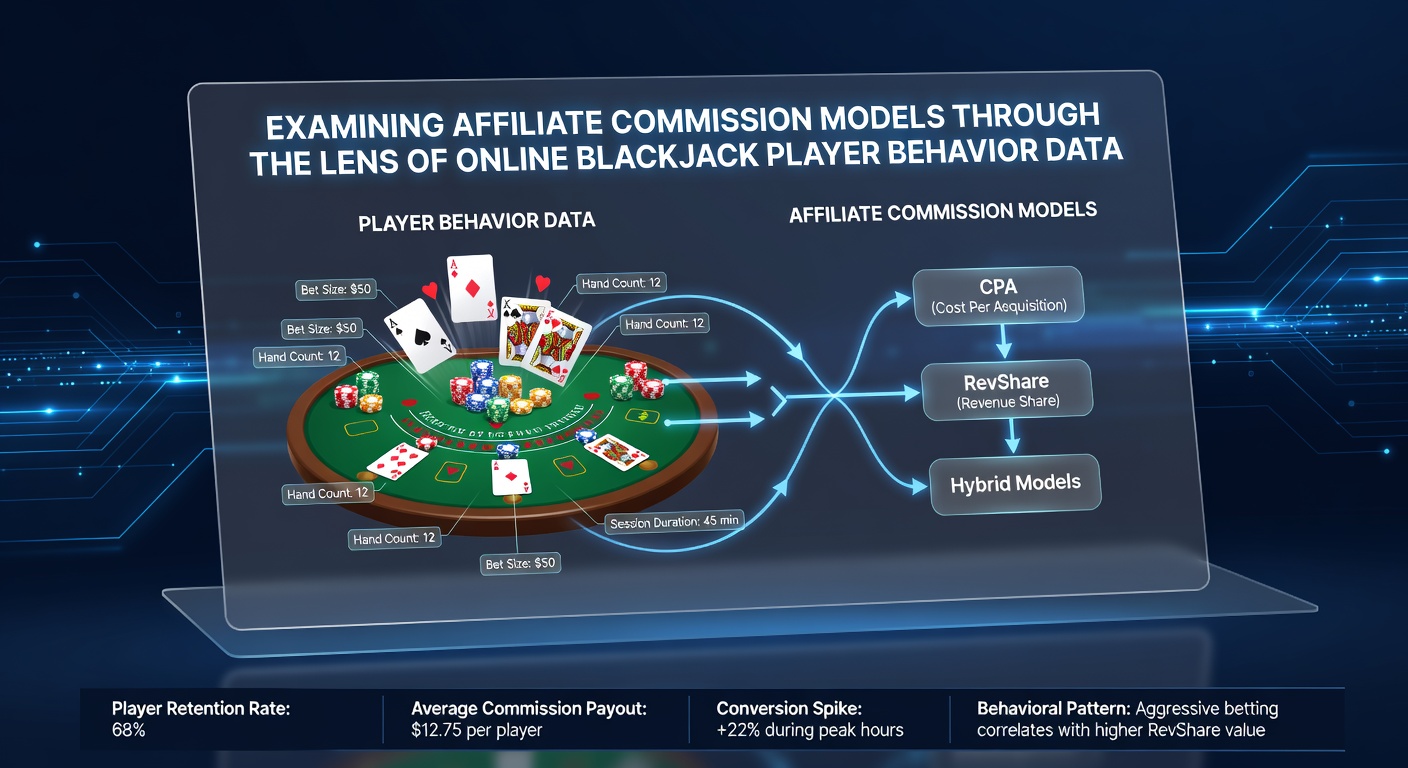
Online blackjack continues to generate substantial data on player engagement patterns, and affiliate commission structures respond directly to those metrics. Revenue share arrangements, cost per acquisition deals, and hybrid models each tie payouts to measurable actions such as first deposits, repeated sessions, or lifetime value, while blackjack-specific behaviors like average bet size, hand frequency, and session length supply the raw numbers that determine which model delivers consistent returns.
Core Commission Models and Their Data Dependencies
Revenue share programs allocate a percentage of net revenue from referred players over extended periods, making them sensitive to retention curves that blackjack data tracks closely. Cost per acquisition payments reward only the initial deposit or registration, so operators examine first-session abandonment rates before scaling those offers. Hybrid structures blend both approaches, and recent figures from June 2026 show operators adjusting the revenue share threshold once player lifetime value exceeds a calculated break-even point derived from multi-week blackjack tracking.
Blackjack tables produce granular logs because each hand records stake, decision, and outcome, allowing platforms to segment players into groups such as high-frequency low-stake strategists or occasional high-roller visitors. These segments display distinct churn patterns that influence whether a flat CPA fee or an ongoing revenue slice proves more cost-effective for the operator.
Behavioral Metrics That Shape Payout Thresholds
Session length data reveals that blackjack participants who complete more than forty hands per visit generate higher cumulative rake than shorter-burst players, prompting programs to extend revenue share windows for affiliates whose traffic sustains those longer engagements. Average bet size correlates with deposit velocity, and operators have adjusted hybrid triggers so that affiliates receive an accelerated bonus once referred players maintain a minimum average wager across three consecutive sessions.
Research indicates that strategic play patterns, including consistent doubling and splitting decisions, correspond to lower house-edge tolerance and extended bankroll duration. Affiliates whose referred traffic demonstrates these patterns receive stronger lifetime value estimates, which in turn supports higher revenue share percentages in renegotiated contracts.
Geographic and Platform Variations in June 2026 Data
European operators processing blackjack traffic through regulated markets report that players acquired via revenue share affiliates show 18 percent higher month-three retention than those brought in under pure CPA terms, according to aggregated platform logs. In contrast, North American state-licensed sites note faster deposit velocity under hybrid models when blackjack tables feature lower minimum bets, because entry-level stakes encourage quicker second and third deposits that unlock the revenue component sooner.

Canadian provincial data compiled through the Responsible Gambling Council shows that blackjack sessions initiated on mobile devices last 12 percent longer on average than desktop sessions, shifting some affiliate programs toward mobile-first CPA tiers followed by revenue share once the player completes a set number of hands. Australian market reports released in the same period indicate that progressive jackpot blackjack variants drive larger average bets yet higher single-session churn, prompting operators to cap initial acquisition payments while extending the revenue share tail.
Adjusting Model Parameters Based on Observed Trends
Operators recalibrate commission tiers when blackjack player cohorts exhibit predictable drop-off points, such as after the tenth session or once cumulative losses reach a specific multiple of the initial deposit. Affiliates receive performance dashboards that display these inflection points, allowing them to refine traffic sources toward segments that maintain longer engagement curves.
Platform analytics teams compare conversion funnels across models, noting that revenue share arrangements reward affiliates who drive traffic with higher lifetime deposit counts, whereas CPA structures favor volume-oriented partners who accept lower per-player margins. Hybrid programs currently dominate new affiliate onboarding because they accommodate both volume spikes and sustained play without requiring immediate renegotiation when behavior data shifts.
Conclusion
Blackjack player behavior data supplies precise inputs for calibrating affiliate commission models, linking session metrics directly to payout timing and percentage rates. As June 2026 datasets continue to accumulate, operators refine thresholds that balance acquisition speed against long-term revenue share obligations, using hand-level logs to predict which referred players will sustain the activity levels required for each structure to remain profitable.