Live Dealer Streams: Optical Character Recognition and the Future of Real-Time Casino Action
The Rise of Live Dealer Streams in Online Gaming
Live dealer streams have transformed online casinos since their debut in the mid-2010s, blending the authenticity of brick-and-mortar venues with digital convenience; players tune in via high-definition video feeds from studios in places like Malta, Latvia, and the Philippines, where professional dealers handle real cards, roulette wheels, and chips, while software captures every action for remote betting. What's interesting here is how these streams eliminate doubts about fairness, as viewers watch outcomes unfold in real time, much like sitting at a physical table. Data from industry trackers shows live dealer games now account for over 40% of online casino revenue in regulated markets, a surge driven by mobile access and immersive tech.
And yet, the real game-changer lies in optical character recognition (OCR), a technology that scans and interprets visual data from cards, dice, or wheels instantaneously; developers integrate OCR into camera feeds, allowing systems to digitize game elements without human input, which speeds up play and enables automated bet verification. Take one studio operator who rolled out OCR-enhanced blackjack in 2023: bets resolved 30% faster, according to their internal metrics, keeping tables busier and players engaged longer. Observers note this shift not only boosts efficiency but also paves the way for scalable, multi-table operations from single streams.
How Optical Character Recognition Powers Live Dealer Accuracy
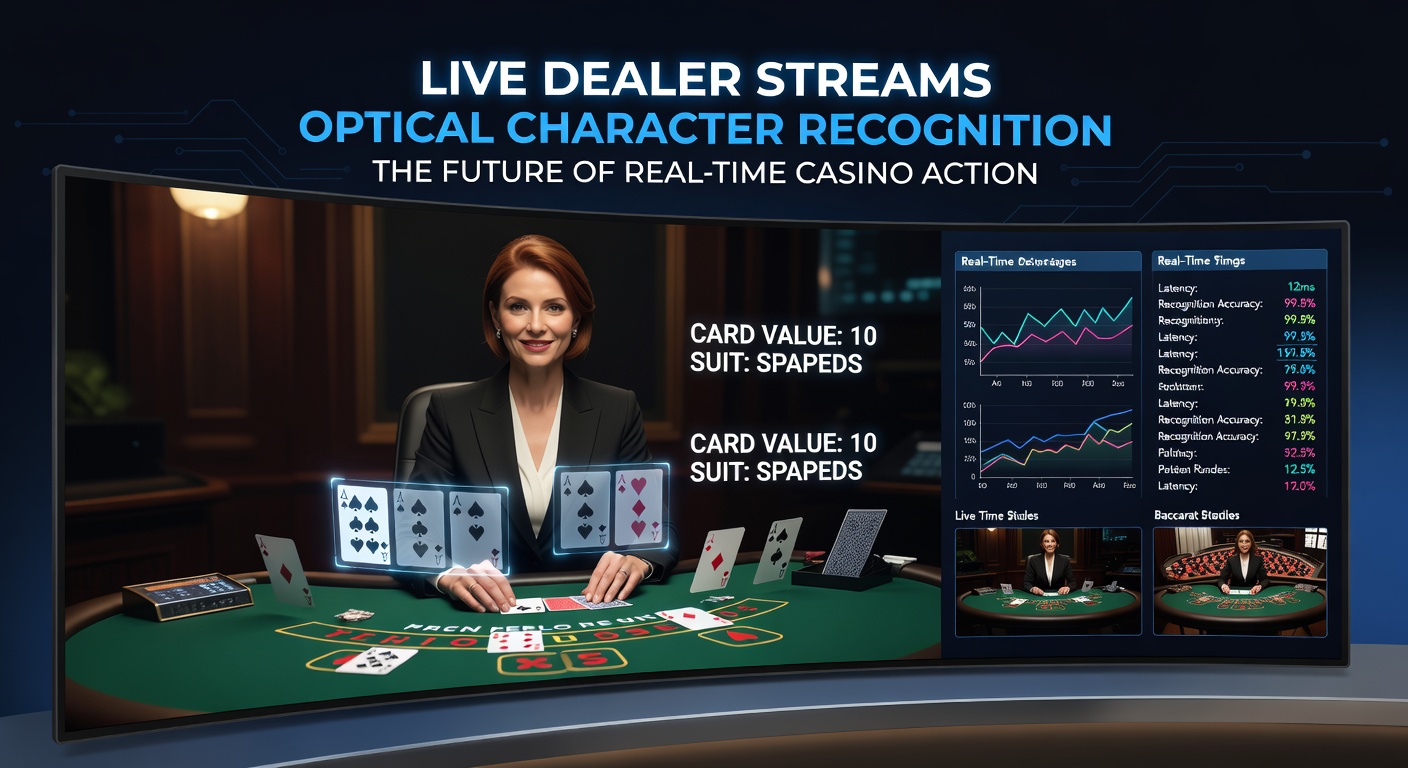
Optical character recognition works by deploying high-speed cameras equipped with AI algorithms that capture images frame-by-frame, then process them to identify numbers, suits, and symbols on playing cards or roulette pockets; these systems, often powered by machine learning models trained on millions of game images, achieve recognition rates above 99.5% under studio lighting, as figures from testing labs reveal. But here's the thing: unlike static scans, live dealer OCR handles motion blur and angles dynamically, using edge detection and pattern matching to output digital results in milliseconds, which sync with betting interfaces for instant payouts.
Researchers at institutions like those affiliated with the Gaming Laboratories International have validated this tech through rigorous audits, confirming it meets standards for randomness and transparency in jurisdictions across North America and Europe. So, when a dealer flips a card in baccarat, OCR reads the pip value and suit, feeds it to the server, and updates all connected players' screens simultaneously; this process, seamless to the eye, underpins the trust that keeps streams running 24/7.
Now consider roulette: specialized OCR tracks ball landings by analyzing wheel segments marked with unique patterns, eliminating manual calls and reducing disputes; one provider reported a 25% drop in player queries after implementation, highlighting where the rubber meets the road in operational smoothness.
Key Benefits Driving Adoption Across Platforms
Platforms leveraging OCR in live streams report higher player retention, since real-time data transparency lets bettors verify every outcome independently; studies from gaming analytics firms indicate sessions last 20% longer on OCR-enabled tables compared to RNG-based games, as the human element pairs with tech reliability. That said, scalability stands out too: a single dealer can support hundreds of virtual seats, with OCR automating side bets and multipliers that would otherwise overwhelm manual tracking.
- Speed: Bets settle in under two seconds, per operator benchmarks.
- Transparency: Public logs of scanned results build confidence.
- Customization: AI tweaks recognition for themed tables, like speed blackjack variants.
People who've analyzed traffic data often discover spikes during peak hours on these streams, where low latency keeps the action flowing without frustrating waits. And for regulators, the tech simplifies compliance, as digital trails match video footage for audits.
Current Implementations and Real-World Case Studies
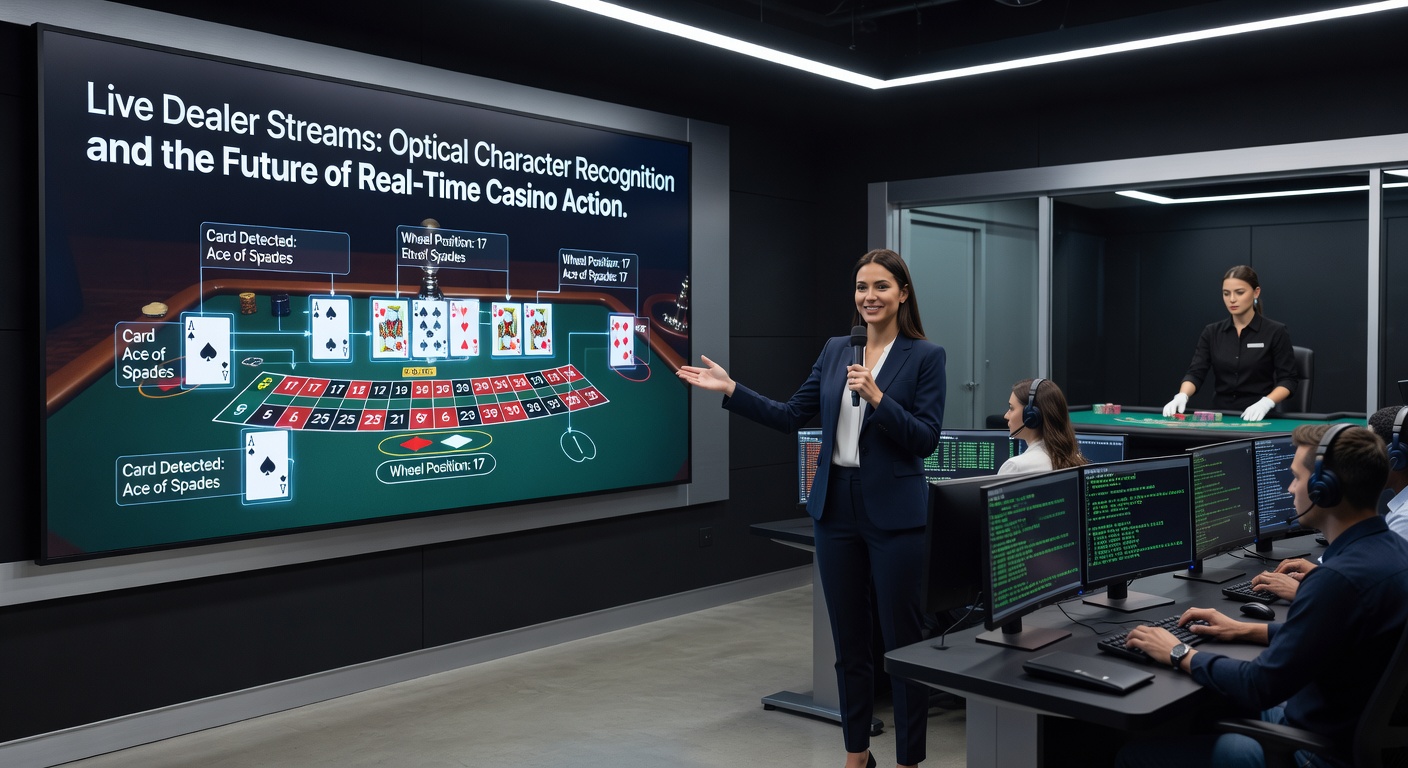
Evolution Gaming, a leader in live casino tech, pioneered OCR integration in its Infinite Blackjack product, where unlimited players bet on shared hands recognized via overhead cameras; data indicates this format handles over 1,000 concurrent users per table, a feat impossible without automated digitization. Similarly, Pragmatic Play's live roulette employs OCR for lightning-fast rounds, shaving minutes off traditional spins and appealing to fast-paced demographics.
There's this case from a Canadian operator licensed under provincial rules: after adopting OCR streams in 2024, they saw a 35% uptick in live game wagers, attributed to flawless multi-language bet syncing, as per their quarterly filings. Experts who've studied these deployments point to hybrid setups, where OCR verifies dealer calls, adding a layer of redundancy that caught errors in 0.1% of hands during trials.
But it's not just table games; emerging bingo and game show streams use OCR for ticket validation and prize wheels, expanding the tech's footprint. Turn to Asian markets, and providers like Ezugi showcase OCR baccarat tailored for high-rollers, with scans confirming roadmaps in real time.
Challenges and Solutions in OCR Deployment
While powerful, OCR faces hurdles like glare from studio lights or card wear, which can dip accuracy below 99% in suboptimal conditions; developers counter this with multi-angle cameras and adaptive algorithms that recalibrate on the fly. Latency poses another issue, especially over global networks, yet 5G rollouts have slashed delays to 50ms, per connectivity reports.
Regulatory bodies, including those in Australia via the Australian Communications and Media Authority's oversight on interactive gambling, demand certified OCR for live fairness, pushing providers to undergo frequent testing. Observers note that while initial setups cost upwards of $500,000 per studio, ROI materializes within months through volume scaling.
So, solutions evolve: edge computing processes scans locally, minimizing cloud dependency; machine learning refines models with player feedback loops, ensuring robustness across variants.
Looking Ahead: OCR and the Future Through 2026
As streams mature, OCR merges with augmented reality (AR), overlaying stats and predictions on feeds for enhanced immersion; prototypes tested in 2025 hint at holographic tables where virtual elements interact with physical ones via precise recognition. By April 2026, industry forecasts predict 70% of live tables will feature advanced OCR, integrated with blockchain for immutable outcome logs, according to reports from global gaming associations.
What's significant is the push toward personalization: AI-driven OCR could suggest bets based on scanned histories, though regulators scrutinize this for fairness. Take one forward-thinking studio planning VR streams; OCR will track gestures for chip placement, blurring lines between remote and onsite play. And with quantum-resistant encryption safeguarding scans, security keeps pace with innovation.
Yet challenges persist, like standardizing OCR across borders, but collaborative efforts among providers signal progress. Those who've tracked patents see a boom in hybrid AI-OCR systems, promising sub-10ms recognition that redefines real-time action.
Conclusion
Live dealer streams, supercharged by optical character recognition, have solidified their role as the gold standard for online casino engagement, delivering verifiable, high-speed action that rivals land-based venues; from current efficiencies in blackjack and roulette to 2026's AR horizons, the tech continues to evolve, balancing scale with trust. Data underscores its impact, with adoption rates climbing amid regulatory nods worldwide. Players benefit from transparent play, operators from streamlined ops, and the industry from sustained growth; that's where the future bets big.