11 Aug 2026
Device Transitions and State Consistency in Live Blackjack Environments

Live blackjack sessions require precise coordination between video streams, betting interfaces, and server-side game logic when players switch between desktop computers, tablets, and smartphones during the same hand or round sequence. Research from industry monitoring groups indicates that session continuity depends on real-time data replication across distributed servers, yet network variability and device hardware differences often disrupt this process. As of August 2026, operators report increased player movement between devices within single sessions, driven by improved mobile networks and cross-device account features.
Core Technical Barriers to Synchronization
Network latency creates the primary obstacle because live dealer feeds rely on continuous video delivery while betting actions must register within strict time windows set by table rules. A player who begins on a desktop connection and switches to mobile encounters delays in card reveal timing or bet confirmation that desktop users avoid. Studies from the University of Nevada Reno Gaming Innovation Lab show that even 200-millisecond variances can alter perceived game fairness when multiple users compete at the same virtual table.
Data state management adds another layer because each device maintains its own local cache of card positions, chip stacks, and dealer actions. When synchronization protocols fail to reconcile these caches, duplicate bets or missed decisions occur. Observers note that WebSocket connections, used by most platforms for live updates, drop during network handoffs between Wi-Fi and cellular, forcing reconnection sequences that interrupt ongoing rounds.
Device-Specific Performance Variations
Desktop environments typically deliver stable frame rates for dealer video and allow larger interface elements that reduce input errors. Mobile clients, however, must compress video streams and adapt touch controls, which introduces processing overhead that desktop versions bypass. Tablets occupy a middle ground yet still face orientation change issues when players rotate screens mid-session. Figures released by the European Gaming and Betting Association reveal that mobile-to-desktop switches account for 34 percent of reported synchronization complaints in blackjack rooms during peak evening hours.
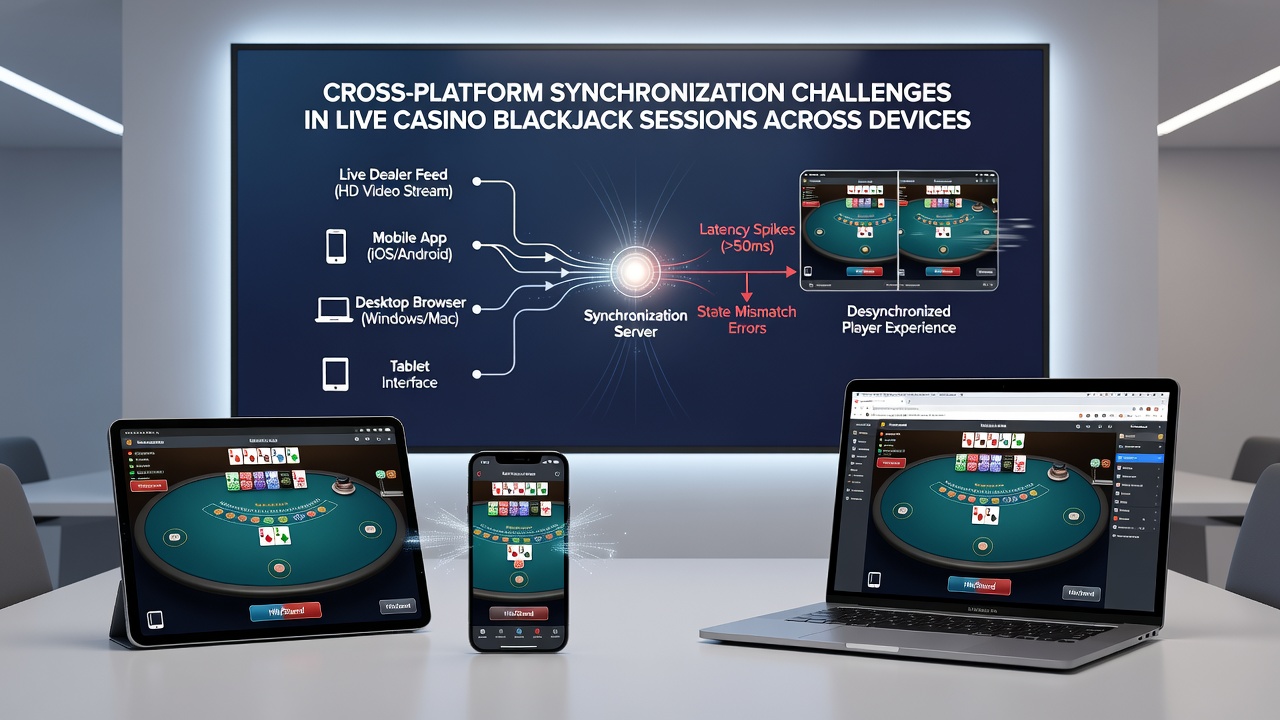
Hardware acceleration differences further complicate matters. Some smartphones process H.264 video streams more efficiently than older tablets, leading to mismatched card animation timing across devices logged into the same account. Developers address this through adaptive bitrate streaming, yet abrupt quality drops during transitions still trigger state reconciliation checks that pause gameplay for several seconds.
Regulatory and Operational Responses
Regulators in multiple jurisdictions now require operators to maintain audit logs of every cross-device transition to verify that no player gains advantage through timing exploits. The Nevada Gaming Control Board implemented updated technical standards in early 2026 that mandate sub-second state propagation across all supported platforms. These rules emerged after several documented cases where players exploited brief desynchronization windows to place late bets visible only on their secondary device.
Operators respond by deploying edge computing nodes closer to major population centers, reducing round-trip times for state updates. One major platform introduced session tokens that persist across device changes, allowing automatic resumption within three seconds provided the network stabilizes. Data from these implementations shows measurable reductions in player complaints, although complete elimination of issues remains elusive due to unpredictable last-mile connectivity problems.
Future Developments in Session Continuity
Emerging protocols such as QUIC-based transport and improved WebRTC implementations offer potential improvements for live video and data streams. Researchers continue testing predictive caching that anticipates device switches based on usage patterns, pre-loading state data on likely target devices before the transition occurs. Industry reports indicate that platforms adopting these approaches see fewer interruptions, particularly during extended sessions that span work breaks or travel between locations.
Conclusion
Cross-device synchronization in live blackjack remains a technical challenge shaped by network conditions, hardware diversity, and strict timing requirements inherent to dealer-hosted tables. Continued investment in edge infrastructure and protocol refinements, alongside regulatory oversight from bodies such as the Nevada Gaming Control Board and the European Gaming and Betting Association, drives incremental progress. Players experience fewer disruptions when operators apply consistent state management across platforms, though complete seamlessness depends on broader improvements in mobile network reliability and device standardization.